
Underground Cable Construction in Charlotte, NC
Charlotte sits in the Piedmont, which means most properties are dealing with dense red clay, root systems from mature trees, and a mix of decades-old and brand-new utility lines already in the ground. None of that is a problem — but it does mean underground cable work here isn't quite the same job as it would be on flat, sandy ground somewhere else. American Broadband Networks builds underground fiber and cable runs with the local soil, terrain, and existing infrastructure in mind, not a one-size-fits-all approach.
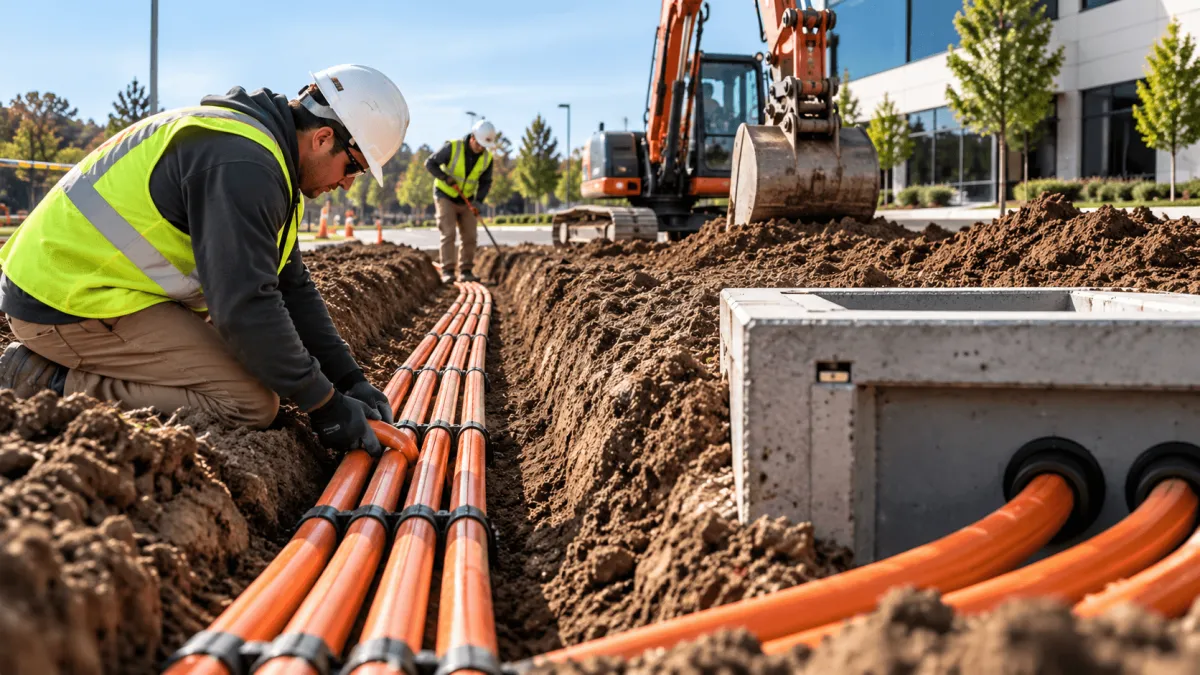
Trenching or Boring — How We Decide
We don't default to one method. The right approach depends on what's already there:
On most residential properties in Charlotte's older neighborhoods, that second scenario is the norm — established trees and landscaping mean boring is often the only way to avoid tearing up something that took years to grow.
Working With Piedmont Clay
Red clay compacts differently than sandy or loamy soil — it holds water longer after rain, and it can be harder to cut through cleanly when dry.
Our crews avoid excavation right after heavy rain when clay is at its heaviest and least stable.
We use the right equipment to cut clean trench lines in dry, compacted clay rather than leaving a ragged cut that's harder to restore.
Mature tree roots are the other local factor. Where a route runs near established trees — common on older Charlotte lots — we favor boring under the root zone rather than trenching through it, which protects the tree and avoids a repeat call a few years later when a root heaves the cable back up.
Call Before You Dig — It's the Law
North Carolina requires anyone performing excavation to notify NC 811 at least three business days before digging, so existing utility lines can be located and marked.
We handle this notification as a standard part of every underground project — you don't have to coordinate it yourself.
This locating step covers utilities that belong to other providers — power, gas, water, other companies' cable and fiber lines. It's separate from, and in addition to, our own site-specific locating work on lines we've previously installed for a property.
Restoring the Surface
A buried cable that's invisible a year later is the goal — not a scar across the yard. How we restore depends on what was disturbed:
Lawn and Turf
Matched to the existing grass type where possible, or seeded and marked off until established.
Driveways and Walkways
Saw-cut cleanly and patched flush, not just filled and left uneven.
Trench Backfill
Compacted properly before any surface restoration, so the ground doesn't settle unevenly months later.
FAQs on Fiber Optics Installation
Does clay soil make underground installation more difficult?
It changes the approach more than it slows the work — we time excavation around soil moisture and use equipment suited to cutting clean lines through compacted clay.
Will you damage tree roots when running cable near mature trees?
Where possible, we bore under the root zone instead of trenching through it, which avoids root damage and reduces the chance of the cable being disturbed later as roots grow.
Do I need to call 811 myself before your crew arrives?
No — we handle the required NC 811 notification as part of every underground project.
How long before my lawn looks normal again after trenching?
Sod takes root within a few weeks under normal conditions; seeded areas take longer and are marked off until established. We'll walk you through what to expect for your specific property.
Can you bore under an existing driveway without cutting it?
In most cases, yes — directional boring passes beneath the driveway without disturbing the surface at all.
How do I get a quote for underground cable construction?
Call (336) 210-5445 or submit a request through our contact form, and we'll schedule a site visit to scope the project.
Get Connected with American Broadband Networks Today!
Built for Charlotte's ground, not just any ground. Let's scope your underground cable project.
Leave us your info
Our Services
Helpful Links
Contact Information
Phone: (336) 210-5445
Email: [email protected]
Business Hours:
Mon - Fri : 8:00AM - 5:00PM
Sat - Sun : Closed
© 2026 All Rights Reserved | American Broadband Networks
Website Done By: LocalEyes